
What Dealerships Use for New Car Smell: The Complete Guide to Products, Methods, and Marketing Psychology

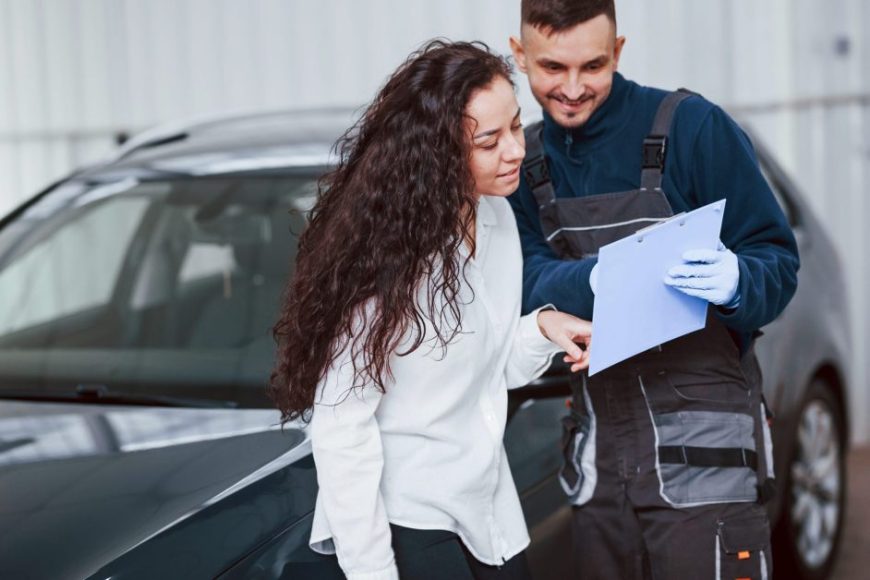
The moment a buyer opens the door of a newly minted vehicle, that signature aroma hits them. It’s intoxicating. It signals wealth, quality, and something fresh from the factory floor. Yet what most people don’t realize is that dealerships don’t rely on luck to create or maintain this smell—they employ specific products, strategic techniques, and deliberate psychology to influence purchasing decisions.
Here’s what dealerships actually use, how they apply it, and why the science behind scent marketing works so powerfully on car buyers.


Understanding What Creates the Authentic New Car Smell
Before exploring what dealerships add to vehicles, it helps to grasp what naturally creates that distinctive aroma in the first place.
The new car smell results from a process called off-gassing—volatile organic compounds (VOCs) released from manufacturing materials as they settle into the vehicle interior. Plastics, adhesives, leather treatments, paint, carpeting, fabrics, and vinyl all emit chemical vapors as part of their natural breakdown. A single new vehicle can release a cocktail of more than 60 different chemical compounds, including formaldehyde, benzene, toluene, styrene, xylene, and ethylbenzene.
The concentration is remarkable: interior air in new vehicles can reach 7,500 micrometers per cubic meter (μg/m³)—roughly 100 times higher than typical outdoor air. This chemical fog smells pleasant at low exposure levels, which is why consumers associate it with “newness” and quality. However, this scent naturally dissipates as materials off-gas over time. By six months of ownership, most of the original smell has vanished.
This creates a critical problem for used car dealerships: vehicles that sit on the lot for weeks or months lack that psychologically powerful “new car” aroma that influences buyer behavior. The solution? They replace it artificially.
The Products Dealerships Actually Use

Ozium: The Industry Standard Since 1940
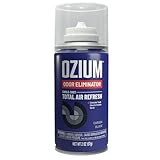
Ozium stands as the most recognizable product in automotive scent management. Originally formulated in the 1940s as a sanitizing spray, dealerships discovered its effectiveness at freshening used vehicles, and it became an industry fixture.
Available in aerosol and gel formats, Ozium comes in multiple scents: original (a classic new car fragrance), vanilla, and black carbon. The spray works by binding to odor molecules and neutralizing them at a molecular level, not merely masking smells. Dealerships appreciate Ozium’s affordability, availability at any auto parts retailer, and consistent results.
FrigiFresh: The AC System Treatment
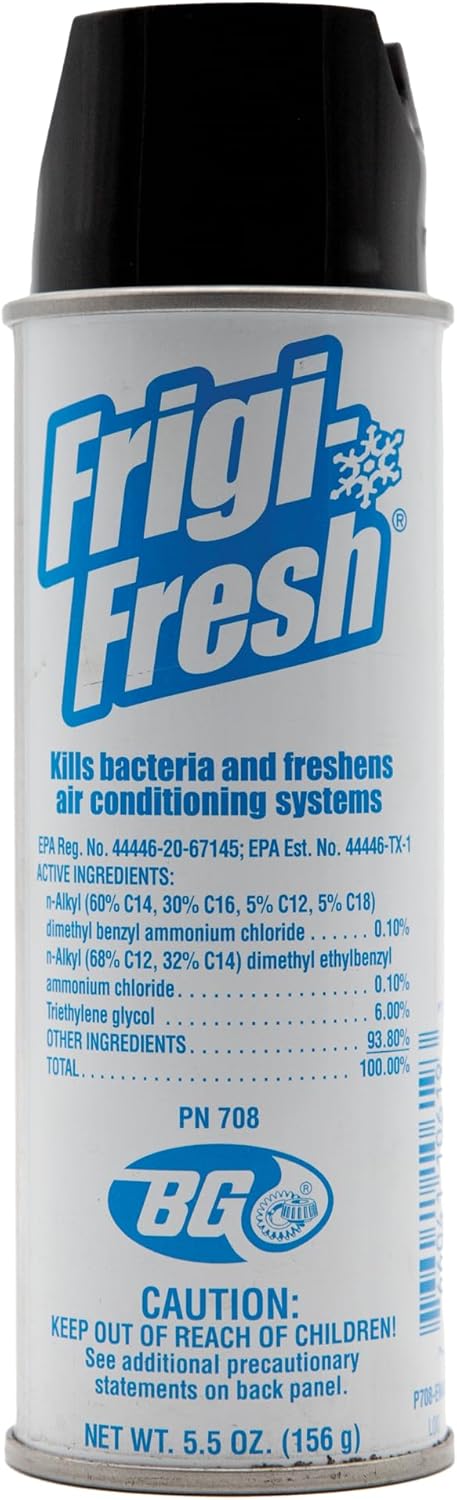
When dealership managers need to address musty or stale odors emanating from air conditioning vents, they typically reach for FrigiFresh. This aerosol spray specifically targets the HVAC system rather than cabin surfaces.
The application process is straightforward: the engine runs with AC set to maximum, and the technician sprays FrigiFresh directly into the external air intake vents (located just below the windshield wiper area) for 6 to 10 seconds. The air conditioning system circulates the product through internal ducts, killing bacteria and fungal growth that causes stale odors. GM dealerships particularly favor this product for reconditioning used vehicles.

Chemical Guys New Car Smell Spray
Professional detailers and larger dealerships often stock Chemical Guys New Car Smell Spray, a premium product specifically engineered to replicate that fresh showroom aroma. Unlike simple air fresheners, this spray contains active odor eliminators that neutralize unpleasant smells while simultaneously leaving behind a cologne-inspired new car scent.
Technicians apply it directly to upholstery, carpets, and fabric surfaces by spraying 2-3 times in strategic locations (under seats, on door panels, across dashboard areas). The product works best in combination with interior cleaning, as it requires surfaces to be dust-free for maximum effectiveness.
3D Car Care: The Natural Alternative
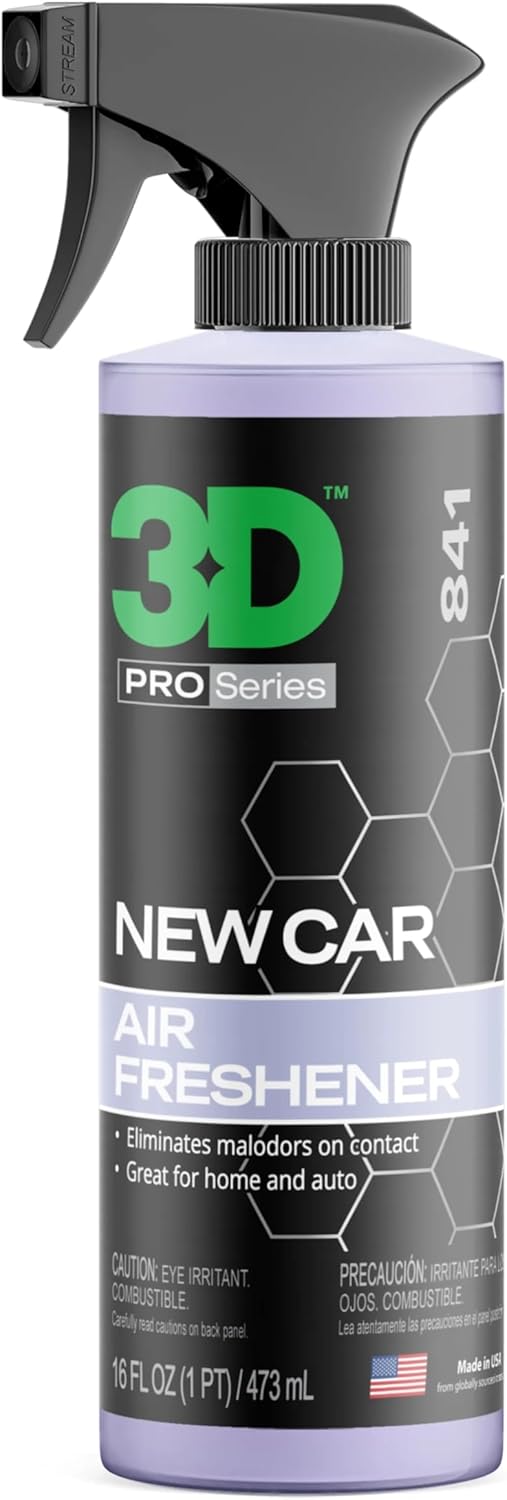
For dealerships catering to health-conscious buyers or operating in regions with strict VOC regulations, 3D Car Care New Car Scent offers an all-natural formulation. This water-based product uses organic aromatic oils rather than synthetic chemicals, claims no toxic ingredients, and carries OSHA compliance certification. Though pricier than Ozium, it appeals to dealerships positioning themselves as premium or eco-friendly operations.
Industrial/Bulk Suppliers: The Professional Network
Most conversations about dealership products miss this critical layer: large franchise dealerships and independent used car lots purchase their scenting solutions from wholesale distributors in bulk quantities.
Carbrite supplies specialized products to professional detailers, with their “Terminator New Car” scent available in 5-gallon jugs. Dealers dilute concentrate into spray bottles for controlled application across multiple vehicles.
Autoscent concentrates come in 8-ounce bottles that produce up to two gallons of usable fragrance when diluted—providing cost efficiency for high-volume operations.
Superior Products and Technician’s Choice are other wholesale brands commonly referenced in dealership reconditioning operations. These suppliers typically work through regional distribution networks, making them invisible to retail consumers but essential to dealership operations.
The advantage? Bulk pricing reduces per-vehicle cost to mere pennies, making scent management economically attractive even for small lots.
How Dealerships Apply These Products
The Complete Interior Spray Method
Standard dealership practice for comprehensive scenting involves multiple application steps. Technicians first remove trash, floor mats, and seat covers, then vacuum all surfaces thoroughly. This ensures odor-absorbing particles don’t interfere with the new scent.
Next, they spray products strategically: under seats where air circulation is minimal, inside door pockets, across the dashboard, and into carpet fibers where odors hide. Two to three spritzes per location, sprayed lightly rather than heavily, prevent over-application that creates a chemical smell instead of freshness.
The process takes roughly 15 minutes per vehicle, making it efficient for lot reconditioning at scale.
AC System Deodorization
For vehicles with stale HVAC odors, the process differs entirely. Technicians start the engine, set the AC to maximum cooling, and open all windows. This prevents concentrated chemical exposure inside the cabin.
Locating the external air intake vent (typically where the hood meets the windshield), they hold the FrigiFresh can 6-8 inches away and spray for 4-8 seconds directly into the intake opening. The AC system pulls the product through internal ducts, coating surfaces where mold and bacteria accumulate.
After application, the windows stay open, and the AC runs for 2-4 minutes. Then the engine shuts off and the vehicle sits undisturbed for 10 minutes, allowing vapors to dissipate naturally. This waiting period is critical—entering the vehicle immediately after application exposes occupants to concentrated chemicals.
Ozone and Advanced Treatments
Larger dealerships investing in professional odor removal sometimes deploy ozone generators—devices that produce ozone gas to oxidize and eliminate odor-causing molecules at the source rather than masking them. This method costs more ($200-500 per treatment) but provides permanent odor elimination for severely compromised vehicles.
The ozone process requires 30 minutes with all windows closed and the AC on recirculation mode. Afterward, dealers allow 10-15 minutes of ventilation before any occupants enter. Ozone generators are most valuable for trade-in vehicles with smoke, pet, or mold odors that basic sprays cannot adequately address.
Why Dealerships Prioritize Scent: The Psychology and Sales Data
The Neuroscience of Olfactory Marketing
Dealerships invest in scenting not out of mere aesthetics but from hardened sales psychology. The human olfactory system connects directly to the brain’s emotional centers, meaning smell influences purchasing decisions on a subconscious level. Research indicates scent affects 75% of human emotion and plays a vital role in memory formation.
When a potential buyer steps onto a dealership lot or into a showroom, a pleasant scent creates immediate comfort and trust. Conversely, musty or stale odors trigger subconscious alarm signals—”this car belongs to someone else,” “something might be wrong,” “I need to negotiate harder.”
This dynamic is why scent management transitions from optional to strategic business practice.
The Financial Impact: A 12:1 Return on Investment
The numbers justify dealership investment in scent products and professional application. Vehicles noted as having “smoke or foul odor” in condition reports at major auto auction networks sell for approximately 3% less than comparable vehicles without odor issues. On a $15,000 used car, that’s a $450 loss per unit simply due to smell.
More critically, Manheim’s (the nation’s largest auto auction network) analysis shows that a $25-50 professional odor treatment can increase a car’s sale price by roughly $300. That represents a 12:1 return on investment—$12 gained for every $1 spent. Few reconditioning actions deliver comparable efficiency.
In retail settings, the impact proves even stronger. Buyers negotiating on a smelly car expect substantial price reductions because they anticipate spending money on remediation. A fresh-smelling vehicle allows dealers to hold asking prices closer to true market value.
Time on Lot and Holding Costs
Beyond immediate price impact, odor affects inventory velocity—how quickly vehicles sell. Cars with unpleasant smells sit longer, incurring daily financing costs, depreciation, and lot space expenses. Each additional 30 days on the lot costs dealerships several hundred dollars in carrying costs. After 60-90 days, dealer profit margins on inventory drop dramatically.
A quick $15-30 scent treatment that accelerates sales by even one week can save hundreds in holding costs while improving overall lot turnover.
Psychological Anchoring and Gender Dynamics
Research shows women have a stronger sense of smell than men and factor olfactory experience more heavily into purchasing decisions. Since women influence the majority of car purchases, dealerships that neglect scent management risk losing sales to competitors who prioritize it.
A female buyer encountering a clean, fresh-smelling car interior stays longer during the test drive, can envision herself driving it, and feels more confident in the dealership’s attention to detail. The opposite—a funky-smelling interior—signals carelessness and undermines trust in the dealership’s overall quality claims.
Building Brand Loyalty Through Signature Scents
Premium dealerships have adopted “olfactory branding”—creating custom signature scents that become synonymous with the dealership experience. Lexus dealerships, for example, offer complimentary spray air fresheners with service appointments, creating continuous brand reinforcement.
Once a customer places that branded air freshener in their own car, the dealership’s logo and scent provide weeks of daily exposure. This passive brand reminder increases customer lifetime value more efficiently than traditional advertising.
Comparing Professional Dealership Methods to Consumer Products
Dealerships have access to advantages beyond consumer products alone, though buyers can replicate much of the professional experience.
Professional Dealership Approach: Uses wholesale concentrates applied by trained technicians, combines multiple methods (AC treatment + interior spray + possible ozone treatment), targets root odor sources before adding fragrance, and leverages bulk pricing for per-vehicle costs under $5.
Consumer DIY Approach: Relies on retail products (Ozium, Chemical Guys, Febreze) costing $5-15 per application, requires manual labor without specialized equipment, may not address AC-based odors, and delivers variable results depending on application technique.
For used vehicles with significant odor issues, professional treatment provides better results. For maintaining fresh-smelling interiors or preventing odors, consumer products work adequately when applied correctly.
Health and Safety Considerations
Despite their widespread use, dealership scent products carry health considerations worth understanding.
The products themselves—particularly Ozium and other spray-based fresheners—contain volatile organic compounds and synthetic fragrances that can irritate respiratory systems, especially with repeated exposure. FrigiFresh-treated air conditioning systems release propellant chemicals that some users find overpowering or nauseating.
For this reason, dealership guidance recommends allowing vehicles to ventilate thoroughly after treatment, driving with windows open initially, and avoiding concentrated exposure to applied products.
Natural alternative products like 3D Car Care claim to eliminate these concerns through all-natural formulations, though they come at a higher cost and may require more frequent reapplication.
Buyers with chemical sensitivities or fragrance allergies should test-drive vehicles after any recent scent treatment and specifically request odor-free reconditioning if needed.
How to Replicate Dealership Results at Home
Buyers wanting that dealership-quality fresh car smell without paying dealership prices can follow professional-grade techniques adapted for retail products.
Start with thorough interior cleaning: Vacuum all surfaces, including under seats and in crevices where odors hide. Use an upholstery cleaner on fabric seats and a leather conditioner on leather. This step is non-negotiable—products work best on clean surfaces.
Address AC odors first: If the vehicle smells stale when the air conditioning runs, obtain a can of FrigiFresh or equivalent AC treatment. Apply per instructions while the engine runs and windows are open. Wait 10 minutes before entering the vehicle.
Apply interior scent strategically: Use Chemical Guys New Car Smell or a professional-grade product purchased from auto parts suppliers. Spray lightly under seats, inside door pockets, on carpet in low-visibility areas, and briefly on dashboard surfaces. Avoid over-application that creates artificial chemical smells.
Allow proper ventilation: Leave windows open for 30 minutes to allow solvents to evaporate. Drive with windows down for the first few hours after treatment.
Consider ozone treatment for severe cases: For vehicles with smoke or pet odors that resist standard sprays, rent a small ozone generator from an auto parts store ($30-50 per day) and follow manufacturer instructions carefully. This requires leaving the vehicle sealed for 30 minutes, then ventilating for 15 minutes.
The complete process—cleaning plus treatment—costs $40-80 in materials and 2-3 hours of labor. Professional dealership treatment might cost $100-200 per vehicle, but it yields faster results and addresses multiple odor sources simultaneously.
The Bottom Line: Why Dealerships Make This Investment
Dealerships use specific, tested products because scent management converts browsers into buyers. The psychological research is clear: pleasant smells reduce perceived wait time, increase dwell time in showrooms, build emotional connections to vehicles, and enable dealers to maintain higher asking prices.
The financial data is equally clear: investing $20-50 in proper odor elimination and scent application returns $300-450 in maintained resale value or auction price for used vehicles, yielding returns that few other reconditioning actions can match.
From Ozium’s nostalgic reliability to FrigiFresh’s technical efficiency to wholesale concentrates’ cost-effectiveness, dealerships employ a tiered product strategy matching different situations and budgets. Large franchise operations use wholesale suppliers and advanced equipment. Independent lots rely on accessible retail products. All prioritize the same goal: transforming how a vehicle feels to a potential buyer in that critical first moment when the door opens.
Understanding this reality transforms how consumers approach used car shopping. That fresh smell isn’t an accident—it’s a deliberate choice designed to influence perception and justify pricing. Knowing what it is, how it gets there, and whether it masks underlying issues empowers smarter purchasing decisions.

Since I was a young boy, I can always remember that fresh, new car scent of my Dad’s new Lincoln. It was a combination of Leather and musk and I’ve always associated it with happy memories.